
For weather temperature changes, ensure that you prepare your air conditioner in the first place. Whether it’s cold or warm weather, preparation of your air conditioner will ensure that it is working properly once you actually need it. Preparation of your system also gets you well prepared beforehand and saves you money in the long run.
Here, in this article, we will give you simple steps for getting your air conditioner ready for a change of season. This will place your unit in tip-top working condition and in operation when you need it most.
Why Do You Need to Prepare Your Air Conditioner for Changing Seasons?
Having your air conditioner prepared for seasons changes positions it in its optimal state, during hot weather when you need cold air or during cold weather when you want to condition it for summer. Conditioning it now does not incur you energy bills and charges. It also freshens the air in your home.
How to Prepare Your Air Conditioner for Warm Weather
During the summer, it can get extremely hot in the UK. It’s essential to ensure your air conditioner is ready for warm weather. Below are some things to do prior to using your unit for the first time during the summer.
-
Clean or Replace the Filter
Your air conditioner filter catches dust, dirt, and the rest. That dirt will accumulate over time and clog the air flow, and reduce the efficiency of your air conditioner. It can decrease the amount of quality of air in your home too.
Prior to utilizing your air conditioner, check the filter. If it is dirty, clean it or replace it. Some filters can be washed with water, but some must be replaced. A clean filter makes your air conditioner more efficient.
-
Check the Outdoor Unit (Condenser)
Your outdoor unit of your air conditioner is referred to as the condenser. It draws in heat, which your machine draws from your house. Keep the space around the condenser free of sticks, leaves, and dust, and sweep it out. Leave some space for the area so air can flow freely.
If condenser coils are blocked, gently scrub them out using a soft-bristle brush or vacuum cleaning. If there is inaccessible dust, then it is best to hire the services of a professional cleaner.
-
Level the Refrigerant
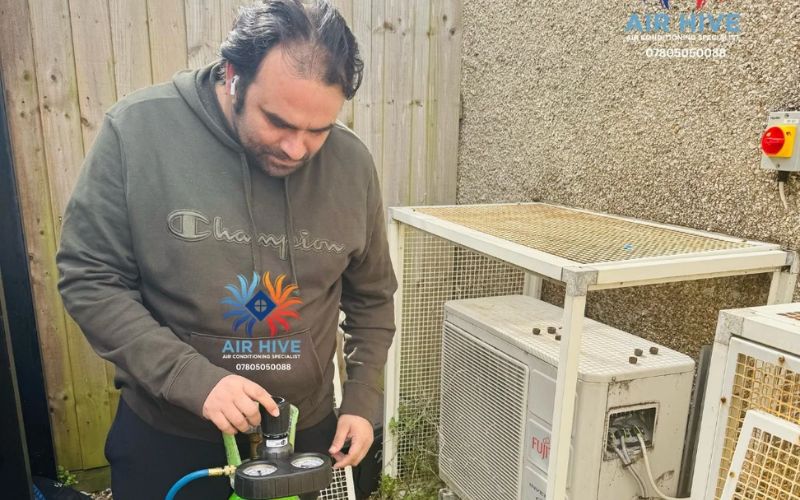
Checked the refrigerant levels.
Refrigerant is the liquid that will cool the air in your air conditioner. Your device will not cool the air if you don’t have refrigerant. If your air conditioner does not cool anything at all, then the issue may be the refrigerant.
You will need to pay a professional to come and check the level of refrigerant and fill it up, if needed. Don’t try it yourself.
-
Check the Thermostat
Your thermostat regulates your house’s temperature. Your air conditioner is instructed to turn off or turn on by itself. Make sure you inspect your thermostat prior to using your air conditioner.
When your thermostat is broken, you have to fix or replace it. Or you must clean the sensor so it can sense the temperature appropriately.
-
Drain Line Cleaning
Your air conditioner pulls in water and takes in humidity as it takes in water with water vapor from the air. Water is forced out in a pipe. If your drain line clogs, water gets into your system.
Check the drain line for a clog. If clogged, sweep it with a brush to clear the clog. You can also pass water through the line to check everything is okay.
How to Prepare Your Air Conditioner for Cooler Weather
As the weather gets cooler, you’ll need to prepare your air conditioner for winter. Even if you’re not using it, keeping it in good condition will help it last longer.
-
Turn Off the Power
First, before you ever touch anything to your air conditioner, ensure the power is off. Safety first. You can easily shut the power off at the master circuit breaker, so no electricity is flowing to the unit.
-
Clean the Unit Inside and Out
Also, in the summer season, make sure you clean your air conditioner when you turn it off. It gets dusty as well and clogged with time, so dust the inner and outer panels of the machine with a cloth.
If your machine is very dirty, then you can even hire someone to come in and clean your machine.
-
Cover the Outdoor Unit
If you have a roof or an external air conditioner, you should be able to cover it in the winter so leaves and dirt will not fall on it. A cover will get dirty, but make sure that the cover is perforated so air can pass through.
Cover the unit with a good cover that will protect your unit from winter.
-
Check for Leaks
Verify for air leaks or holes in your air conditioner. Air will escape through these holes and decrease your unit’s efficiency. Leaks are taped over or professionally sealed if found.
-
Professional Inspection
It is always best that you have your air conditioner repaired more than once a year by a professional. A professional can identify issues that you might not even be aware you are experiencing and have your unit prepared for the next season.
How to Prepare Your Air Conditioner for Spring
The best season to condition your air conditioner during summer is spring. You should check your system so you can use it during the summer.
-
Turn On the Unit
Preventatively, switch on your air conditioner before the upcoming hot season arrives so that it is well in working condition. Switch it on for a few minutes and check whether it can cool the air. If it produces abnormal sounds or fails to cool as expected, have a technician fix it.
-
Replace the Filter
It is time to replace your air conditioner filter this spring if you have not yet. A fresh filter keeps your system running more economically and your indoor air cleaner.
-
Inspect the Refrigerant
If the temperature is not high enough, inspect the level of refrigerant in your air conditioner. Your air conditioner will not cool sufficiently if it’s low on refrigerant. If you notice a deficiency of cooling capacity, have a technician check and recharge the refrigerant.
-
Inspect the Drain Line
As with everything, ensure the drain line is clean. Rainwater will find its way back in and destroy your system if clogged. Drain water from the drain line to remove waste so it will function properly.
-
Clean the Area Around
Inspect the outside unit to see if something is blocking it. Remove anything in front of it, such as plants, leaves, and other things that will cut down on airflow. There needs to be some airway around the condenser so it can breathe.
Conclusion
Regular seasonal maintenance of your air conditioner will keep it in the best condition. Whether it is cold outside or hot outside, it will never be an issue, and you will also be saving money. Just follow some easy steps to keep your air conditioner in the best condition all year round.
In case you find yourself stranded, don’t call a technician until you have no other choice! Save your unit today, and it will continue to function when you need it most!
Frequently Asked Questions
-
How often do I replace my air conditioner filter?
You will also need to replace or clean the filter every 1 to 3 months. If you have pets and allergies, you may need to change it more often.
-
Can I clean my condenser coils?
Yes, you may vacuum or lightly brush them. But if they are extremely dirty, you’d better let the professionals handle it.
-
What do I do if my air conditioner is not cooling?
Check the outdoor unit, refrigerant, and filter. If everything is okay, then call a technician to check your air conditioner.
-
How will I know if the thermostat is bad?
If your thermostat is not registering a correct temperature or is not regulating your air conditioner, then it most likely is broken. You should be able to replace the thermostat or clean out the sensor if you need to.
-
Should I cover my air conditioner in winter?
Yes, it does help to keep your outside unit leaf- and dirt-free as well as snowy. Make sure the cover provides airflow.
|