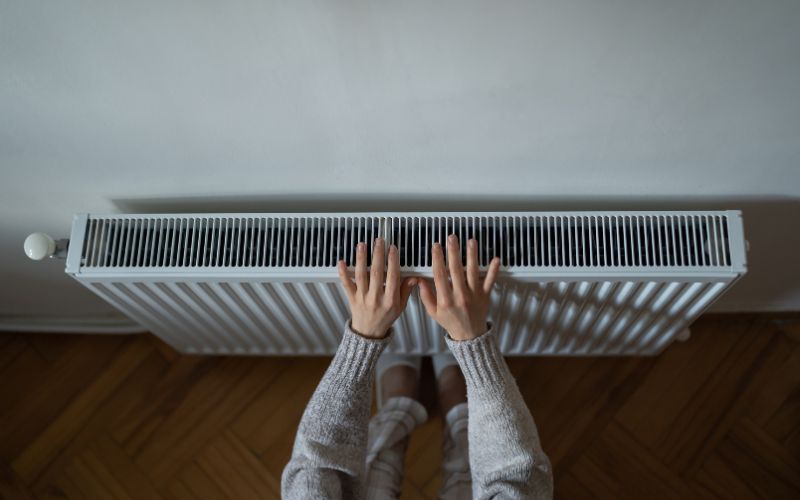
If your radiator is warm at the top but cold at the bottom, it is not heating your room properly. This is a very common central heating problem, and it usually means hot water is not flowing freely through the whole radiator.
This guide explains the most likely causes, what you can safely check yourself and when to call a heating engineer. Many London homes have older pipework and heating systems, so this issue is more common than most people expect.
A radiator that is hot at the top and cold at the bottom is most often caused by a build-up of sludge (rusty debris) that settles at the bottom of the radiator. Other causes include restricted water flow, a faulty valve, an unbalanced system or a circulation problem. Bleeding the radiator usually will not fix it, because bleeding releases trapped air, which causes cold patches at the top instead.
What is Normal on a Radiator?
A working radiator is usually hottest where the hot water enters. The bottom is a little cooler, because the water gives off heat as it flows through. A small difference is normal.
A clearly cold bottom, or cold patches across the radiator, is not normal. It means water is not circulating properly.
Why is My Radiator Cold at the Bottom?
1. Sludge in the Radiator
Over time, the metal parts of a central heating system corrode. This creates fine rusty particles that travel around in the water. Where the water flows slowly, such as the bottom of a radiator, these particles settle and build up as sludge.
As sludge builds up, hot water cannot flow freely through the whole radiator. The top stays warm, while the bottom stays cold. Sludge can also cause cold patches in the middle of a radiator.
2. Restricted Water Flow
Not every cold-bottom radiator is caused by sludge. Anything that restricts the flow of hot water can have the same effect, such as a partly closed valve or an unbalanced system.
One useful clue is how many radiators are affected. If only one radiator is cold at the bottom while the rest heat well, the problem is probably in that radiator or its valves. If several radiators are affected, the cause is more likely to be in the wider system.
3. A Valve or Circulation Problem
Valves and the central heating pump control how hot water moves around the system.
- Thermostatic radiator valves (TRVs) control how much hot water enters each radiator. A stuck or faulty valve can restrict the flow.
- The central heating pump circulates the water. If circulation is weak, some radiators may get less hot water than others.
These faults are not always obvious from the outside, and they often need an engineer to diagnose.
Will Bleeding the Radiator Fix a Cold Bottom?
Usually not. Bleeding releases trapped air, and air collects at the top of a radiator. A radiator with trapped air is typically cold at the top and warm at the bottom, which is the opposite of your problem.
If the bottom is cold, bleeding will not remove sludge or fix poor circulation. Bleeding it again and again will not help, and it can let more air into the system.
What Can You Safely Check Yourself?
You can try a few simple checks. Do not take the radiator off, drain the system or touch any gas parts.
- Warm the system fully: Turn the heating on and give the radiators 20 to 30 minutes. Be careful, as radiators and pipes can be very hot.
- Compare other radiators: Check whether only one radiator is affected or several.
- Check the TRV setting: Make sure the thermostatic valve is not turned down low.
- Check the boiler pressure: Look at the pressure gauge on your boiler. Low pressure can reduce circulation. Check the manual for the correct range, and do not guess.
- Note the pattern: Is the bottom cold, or is it cold patches, or is the top cold? This helps an engineer find the cause faster.
If these checks do not help, or if you are unsure, speak to a heating engineer.
How Do Engineers Fix a Cold-Bottom Radiator?
The right fix depends on the cause.
- Sludge: The system may need cleaning or flushing. The best method depends on the state of the system and how many radiators are affected.
- A faulty valve: The valve may need servicing or replacing.
- Poor circulation or balance: An engineer may need to check the pump and balance the whole system.
- An old or damaged radiator: In some cases, replacing the radiator is more sensible than repairing it. If yours is badly corroded, leaking or too small for the room, radiator installation and replacement in London can give you a modern, efficient alternative.
Replacing a radiator without finding the cause is a common mistake. A new radiator connected to a sludgy system can end up with the same problem.
What If Several Radiators Are Cold at the Bottom?
If more than one radiator has the same problem, the cause is probably in the wider heating system, not a single radiator. Look out for these signs:
- Several radiators take a long time to warm up.
- Some rooms are colder than others.
- The home heats unevenly.
- The boiler seems to run, but the house does not get warm.
- You can hear unusual noises from the pipes or boiler.
- The heating problems keep coming back.
These signs do not prove sludge, but they are a good reason to have the whole system checked.
Common Mistakes to Avoid
- Assuming it is trapped air: Always note where the radiator is cold before you act.
- Bleeding it again and again: If the bottom is still cold after bleeding, bleeding is not the answer.
- Replacing the radiator first: Find the cause before you spend money.
- Ignoring the pattern: One cold radiator and several cold radiators point to different problems.
- Attempting specialist work yourself: Boilers, gas supplies and pressurised systems should be handled by qualified professionals. Any work on a gas boiler must be done by a Gas Safe registered engineer.
How to Reduce the Risk of Sludge
- Book an annual boiler service, so problems are spotted early.
- Ask your engineer about a magnetic filter and a protective inhibitor for your system.
- Bleed radiators when they have trapped air at the top.
- Do not ignore cold patches, noisy pipes or a boiler that is working harder than before.
When Should You Call a Heating Engineer?
Call a heating engineer if:
- The bottom of your radiator stays cold after you have run the checks above.
- More than one radiator is affected.
- Your heating is getting worse over time.
- You are unsure about your boiler pressure or circulation.
- There is any smell of gas. In that case, follow the national gas emergency advice straight away.
Air Hive UK is based in Hounslow and works across West London and Greater London. Our Gas Safe registered engineers offer boiler services in London, including servicing, safety checks and repairs, and can assess whether the fault is in a radiator, a valve, the circulation or the wider heating system. Contact us for friendly advice.
Frequently Asked Questions
Why is my radiator hot at the top and cold at the bottom?
This is often caused by sludge settling at the bottom of the radiator and blocking the flow of hot water. It can also be caused by restricted circulation or a valve fault. If it continues, ask an engineer to check it.
Do I need to bleed a radiator that is cold at the bottom?
Usually no. Bleeding releases trapped air, which causes cold patches at the top, not the bottom.
How do I fix a radiator that is cold at the bottom?
It depends on the cause. Sludge may need the system to be cleaned or flushed, a faulty valve may need servicing or replacing and poor circulation may need an engineer to check the pump and balance the system. A badly damaged radiator may need replacing.
Why are all my radiators cold at the bottom?
If several radiators are affected, the cause is more likely to be in the wider system, such as sludge, circulation or valve faults. A heating engineer can assess it.
Does radiator sludge make heating less efficient?
Yes. It can cause uneven heating and slow warm-up times, and it can make the boiler work harder. If your heating has been getting worse, get the system checked.
Should I replace a radiator that is cold at the bottom?
Not always. A cold bottom does not mean the radiator has failed. It is usually a sign of sludge or restricted flow. Replacement is worth considering if the radiator is old, damaged or unsuitable for the room.
When should I call a heating engineer?
Call one if the bottom stays cold after basic checks, if more than one radiator is affected, if the heating is getting worse or if you have any doubts about your boiler.
Final Thoughts
A radiator that is hot at the top and cold at the bottom usually points to sludge, restricted flow or a circulation problem, rather than trapped air. Do not assume it needs bleeding, and do not replace the radiator before you know the cause.
If the problem continues, or several radiators are affected, get a qualified heating engineer to check the system. If you are planning a bigger upgrade, Air Hive UK can also help with your central heating, radiators and controls.