
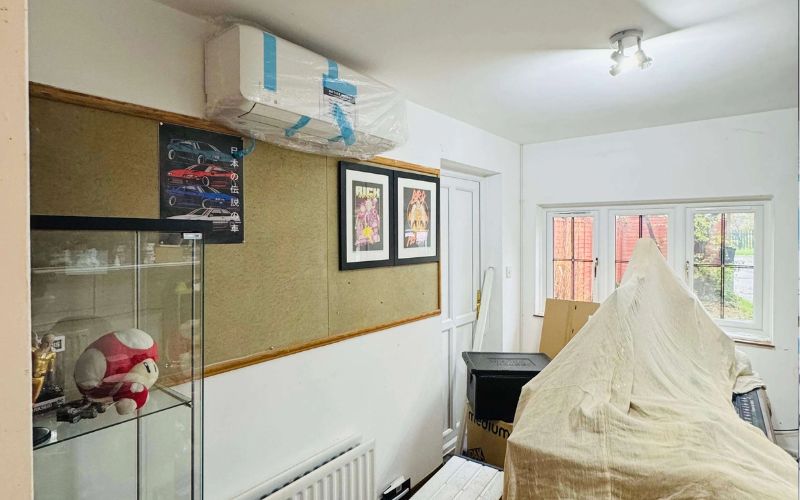
Living in a flat in London has many benefits, but it can be a hassle to regulate the building’s temperature, especially during summer. Not every apartment was originally fitted with cooling devices, and therefore, air conditioning is gaining popularity. However, space, rules, and efficiency are factors to consider when choosing the right system for a flat. Air Hive UK provides professional consultancy to help people who stay at home identify air conditioning systems that suit their small living rooms. The following is a guide to what you must know before getting air conditioning installed in a flat in London.
The Reason Air conditioning is becoming a necessity in London flats.
London has been slowly getting warmer, and summer heatwaves are becoming a trend. Older buildings have stuffy, hot flats, especially on higher levels.
Common issues include:
- Poor ventilation
- Limited airflow
- Confinement of heat in smaller areas.
- Open-window Noise in the busy places.
Air conditioning provides controlled comfort for indoor environments, allowing any temperature to be adjusted to a comfortable level regardless of the temperature outside.
Types of air conditioning applicable in flats.
Not all the air conditioning systems will be applicable to flats. Space constraints and building codes can affect what can be installed.
-
Portable Air Conditioners
A simple, non-permanent solution is to use portable units. They are perfect with renters or temporary seekers.
However, they may:
- Be less efficient
- Venting is required.
- Produce more noise
-
Split Air Conditioning Systems
Split systems are also a very popular flat choice. They are made of an internal unit and an external condenser.
Benefits include:
- Quiet operation
- Energy efficiency
- Cooling of particular rooms.
It is typical for such systems, recommended by professionals like Air Hive UK, to be comfortable in the long term.
-
Multi-Split Systems
Multi-split systems can connect many indoor units to a single outdoor unit, making them suitable for larger or multi-room flats. This is a steady cooling in various regions. They are more flexible and controllable, but more expensive.
Planning Permission and Regulations
Building regulations and permissions should be checked before installing air conditioning in a flat in London.
Key considerations include:
- Is the property leasehold or freehold?
- Building management restrictions.
- Noise and position of the outdoor units.
- Planning needs within the locality.
Approval by external units is necessary in most situations. Professional installers, such as Airhive UK, may help you meet these requirements and ensure they are met.
Choosing the Right System for Your Flat
Some of the factors that should be considered when choosing the appropriate system include:
- Size of the flat
- Number of rooms
- Insulation and window.
- Budget
A tiny studio flat may need one unit, but a larger apartment can be multi-room.
The potential of underpowered or oversized systems to reduce efficiency must be appropriately assessed when measuring power.
Energy Efficiency and Running Costs
Flat owners are very mindful of their energy efficiency. Contemporary air conditioners are designed to consume less energy, thereby reducing operating costs.
Efficient systems can:
- Keep the temperatures constant.
- Reduce electricity usage
- Lower overall energy bills
In the long run, selecting an energy-efficient model and using it conscientiously can be very helpful.
Installation Process
It is essential to have your system professionally installed to ensure it is safe and effective.
This usually takes the following steps:
- Assessing the property
- Prescription of appropriate units.
- Fitting inside and outside elements.
- Testing the system
The installation will be conducted with the assistance of experienced providers such as Air Hive UK and will be performed in compliance with all requirements and with minimal inconvenience.
Maintenance and Long-Term Performance.
Regular servicing will ensure your air conditioning system runs well. Nevertheless, the condition of performance can be adversely affected if it is not well-maintained.
Basic maintenance includes:
- Filter washing or changing.
- Checking airflow
- Repairing the system once a year.
A properly maintained system outlives and remains in service, providing constant comfort.
Advantages of Air Conditioning in Flats.
Air conditioning has a few practical advantages for flat living:
- Better comfort in the house in hot weather.
- Better air circulation
- Reduced humidity
- Better environment than with open windows.
Air conditioning is a good investment that many people in London should consider for the following reasons.
Final Thoughts
Air conditioning is a more realistic addition in a flat in London, providing at least some comfort and control in a changing climate. Even with space limitations and regulations, the right system can change where you are. You will be guaranteed a year of sound cooling with an appropriate selection of units, proper installation, and maintenance. Air Hive UK may assist you in finding the most appropriate solution to your flat and simplify and reduce the stress of the process.
Frequently Asked Questions
Can an air conditioner be fitted in a flat within London?
Yes, but you may need to obtain permission depending on your building and lease agreement.
Which is the best small flat air conditioning?
Split systems have been very effective, simple to use, and virtually quiet.
Should we use portable air conditioners?
They may be temporary, yet less efficient than an installation.
How much does it cost to have an air conditioner?
The price will depend on the system and application, but the existing units will be energy-efficient.
Who is to help with the installation in London?
Professional providers like Air Hive UK can do the installation, and the system can be compliant with the regulations.