If your heat pump uses more electricity in winter, that does not always mean something is wrong. Cold weather makes your home lose heat faster, and the system has to work harder and for longer to keep it warm. However, a bigger electricity bill can sometimes point to settings, airflow, maintenance or system problems that are worth fixing.
This guide explains why heat pump electricity use rises in winter, how to tell normal winter demand from a fault, and what you can do to reduce your costs.
Heat pumps use more electricity in winter mainly because your home needs more heat and the outdoor air is colder, which makes the system less efficient. Longer running times and defrost cycles add to this. A sudden or unusually large jump, especially with weaker heating, icing, odd noises or frequent use of a backup heater, is worth getting checked by a qualified engineer.
Why Does a Heat Pump Use More Electricity in Winter?
A heat pump does not make heat from electricity alone. It uses electricity to move heat from the outdoor air into your home. The colder the air outside, the less heat is easy to collect, so the system has to work harder to deliver the same warmth.
At the same time, your home loses heat more quickly. Heat escapes through walls, windows, doors, roofs and ventilation. The larger the gap between the indoor and outdoor temperature, the more heat you need to replace.
So electricity use usually rises in winter for two reasons: you need more heat, and the heat pump is slightly less efficient in the cold. This is normal. Heat pumps still work in freezing weather, but how well they perform depends on the system design, the building and how much heat the home loses.
Efficiency vs Total Electricity Use
Heat pump efficiency is often described using a figure called the coefficient of performance (COP). It shows how many units of useful heat the system produces for each unit of electricity it uses. For example, a COP of 3 means three units of heat for every one unit of electricity.
Seasonal efficiency is often shown as SCOP, which looks at performance across the whole heating season. The COP is lower on very cold days than on mild ones.
This means a heat pump can be efficient and still use a lot of electricity in a cold spell. A more useful question than “How much electricity did it use?” is “How much heat did I need, and how cold was it?”
Common Reasons for Higher Electricity Use
1. Longer Running Times
In mild weather, a heat pump may reach the set temperature quickly and then ease off. In a cold spell, it may run for long periods, sometimes almost continuously, especially in homes that lose a lot of heat.
Poor insulation, draughts, cold rooms and heat emitters that are too small can all increase the heating demand. Many London homes, including solid-wall Victorian houses and top-floor flats, lose heat quickly, so this is a common cause.
2. Defrost Cycles
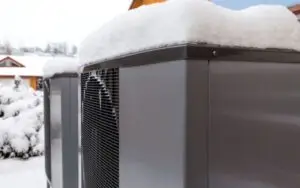
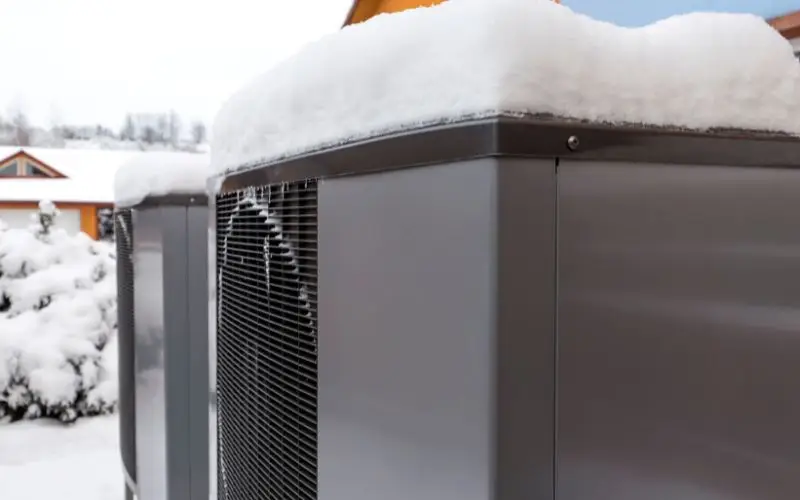
In cold, damp weather, frost can build up on the outdoor unit. The system briefly clears it by running a defrost cycle, which uses extra energy. Short defrost cycles are normal and do not mean there is a fault.
If the outdoor unit is heavily iced up, or the system stays in defrost mode for a long time, ask an engineer to check it.
3. High Temperature Settings
The higher you set the target temperature, the more work the heat pump has to do in cold weather. Avoid raising the setting repeatedly. A comfortable temperature of around 18°C to 21°C is a sensible range for many homes, depending on who lives there.
Heat pumps usually work best when they run steadily. Large daily changes in temperature can make them work harder to catch up, so follow your installer’s advice for the controls.
4. Boost Modes and Backup Heaters
Some heat pump systems have a boost mode or an electric backup heater that switches on in very cold weather or when the home is slow to heat up. These use much more electricity than the heat pump alone. If your system uses the boost or backup heater often, it may be a sign that the system needs checking, or that the controls are not set up as they should be.
5. Restricted Airflow
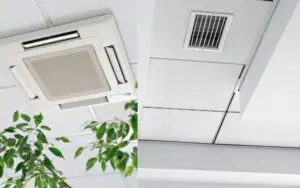
If you have an air conditioning unit that also provides heating, airflow matters. Dirty filters, blocked indoor units or obstructions around the outdoor unit can reduce performance, so the system has to work harder to produce the same heat. Keep the area around the outdoor unit clear of leaves, snow and anything that blocks the airflow.
6. A Fault or an Ageing System
A gradual rise in winter is normal. A sudden change is different. If your electricity use jumps when the weather and your habits are about the same, the cause could be one of these:
- low refrigerant or a refrigerant leak
- a sensor fault
- a compressor problem
- restricted airflow
- an electrical fault
- poor control settings
- worn parts
Work on refrigerant and electrical parts must only be done by qualified engineers. Do not try to fix these yourself.
How to Tell Normal Winter Use From a Problem
Likely normal |
Worth checking |
| Electricity use rises gradually as the weather gets colder | A sudden jump when the weather has not changed |
| The unit runs for longer in a cold spell | The system struggles to reach the set temperature |
| Short defrost cycles | Heavy ice on the outdoor unit or very long defrost cycles |
| Steady heating across the home | Weaker heating or cold rooms |
| Normal operating sounds | Unusual smells, noises or error codes |
How to Reduce Heat Pump Electricity Use in Winter
No single setting suits every property. The best approach is to reduce heat loss and make sure the system is installed, sized and maintained properly.
- Clean the filters: Follow the manufacturer’s instructions for any filters you can reach.
- Keep airflow clear: Do not block the indoor or outdoor units.
- Use the controls as recommended: Follow your installer’s or manufacturer’s guidance.
- Avoid unnecessarily high temperatures: Choose the lowest setting that keeps you comfortable.
- Reduce heat loss: Look for draughts, gaps around doors and windows, and poor insulation.
- Track your use: Compare your electricity use with outdoor temperatures and heating hours. This shows whether a rise matches the weather.
- Book a service: If performance changes, ask a professional to check the system.
- Review an older system: An older or less efficient system may be worth having assessed.
Does a More Efficient Heat Pump Always Use Less Electricity?
Not necessarily. A very efficient heat pump can still use a lot of electricity if it is heating a large, poorly insulated home. Efficiency and total use are different things. A more efficient system produces more heat from each unit of electricity, but it still has to replace all the heat your home loses.
That is why insulation, system size, heat emitters and how you run the system all matter.
Why Winter Servicing Matters
A heat pump or an air conditioning system that heats can only perform well if it is in good condition. A service can help spot problems early, before they cause a breakdown in the coldest weather.
A service for an air conditioning system typically includes cleaning the filters, checking the electrical connections, testing controls and checking performance, and refrigerant checks are carried out only by qualified engineers. If you use an air conditioning unit for heating, it is a good idea to have it checked before winter. Air Hive UK offers air conditioning servicing in London for homes and businesses.
Heat Pumps vs Air Conditioning: What Is the Difference?
The terms are often mixed up, because both work on a similar principle.
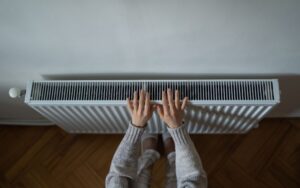
- Air-to-water heat pumps take heat from the outdoor air and send it into a wet central heating system, such as radiators or underfloor heating.
- Air-to-air heat pumps and reversible air conditioners take heat from the outdoor air and release it directly into a room. Many modern split-system air conditioners can heat as well as cool, so they provide temperature control all year round.
The right option depends on your property, room size, layout, heating needs and the system you already have. There is no single set-up that suits every home in London and the surrounding areas.
When Should You Call an Engineer?
A rise in electricity use during winter is not usually a fault by itself. But speak to a qualified engineer if you notice several of these signs together:
- The system struggles to reach the set temperature.
- Electricity use has jumped suddenly.
- Heat output seems weaker.
- The outdoor unit is heavily iced up, or defrosts again and again.
- There are unusual smells or noises.
- An error code appears.
- The system relies on the boost or backup heater very often.
Air Hive UK offers heating systems and heat pump advice in London, as well as air conditioning installation, servicing and repair for homes and businesses. A professional check can show whether your higher bills are normal winter demand or a sign of a problem. Contact us for friendly advice.
Frequently Asked Questions
Do heat pumps use more electricity in winter?
Yes, usually. Your home needs more heat, and the system works harder when it is cold outside. This is normal. A sudden or large jump is worth checking.
Why does my heat pump run all the time in winter?
Long or near-continuous running can be normal in cold weather, especially if the system is holding a steady indoor temperature. If it never reaches the set temperature, or your bills have risen sharply, ask an engineer to check it.
Is a heat pump less efficient in cold weather?
Yes, a little. Heat pumps still work in freezing weather, but their efficiency falls as the outdoor temperature drops. The effect depends on the system, the building and how the controls are set.
How can I make my heat pump work better in winter?
Keep the airflow clear, clean the filters as instructed, avoid very high temperature settings, reduce heat loss from the building and arrange regular servicing.
Can air conditioning heat my home in winter?
Many reversible air conditioning systems can both cool and heat. Whether one is right for your home depends on the system and the property.
Should I service my heat pump if my electricity use spikes?
Yes, especially if you notice icing, unusual noises, error codes or frequent use of the boost or backup heater. A professional check can tell whether it is normal winter demand or a fault.
Are heat pumps cheaper to run than boilers?
It depends on the system, the property, your energy tariff and the weather. Heat pumps can produce several units of heat for each unit of electricity, but your actual costs depend on your home and how you use the system.
Final Thoughts
A heat pump usually uses more electricity in winter because your home needs more heat, the weather is colder and the system runs for longer. This is normal. But if the increase is sudden, or comes with weaker heating, icing, noises or heavy use of a backup heater, it is worth investigating.
Keep the system maintained, use the controls sensibly and reduce heat loss from your home. If you want help with a heat pump or an air conditioning system that heats, Air Hive UK can advise on the next step for your property in London and the surrounding areas.