When the weather gets hot, many people turn to air conditioning to stay cool. But with so many different types of air conditioners out there, it can be confusing to know which one is best for your home or office. In this article, we’ll look at the different types of air conditioning systems, how they work, and which one might be the right choice for you.
What Are Air Conditioning Systems?
Air conditioning systems cool indoor spaces by removing heat from the air. They use a special process called refrigeration to move the heat from inside to outside. This makes the air inside cooler and more comfortable.
1. Central Air Conditioning Systems
Central air conditioning systems are used in larger homes and buildings. They have one main unit, usually located outside, that cools the air. Then, the cool air is sent to different rooms using ducts and vents.
How Does It Work?
Central air conditioners pull warm air from inside, cool it by passing it over refrigerant coils, and then send the cool air back into the rooms. The temperature is controlled by a thermostat, which keeps the air at a steady level.
Best For:
Central air is best for large homes or buildings that need to cool many rooms. It provides even cooling and is efficient for bigger spaces.
Pros:
Cools the whole house evenly.
Convenient, as you control the temperature with one thermostat.
Great for large homes or offices.
Cons:
High installation cost.
Needs ducts, which may not be available in older homes.
2. Window Air Conditioners
Window air conditioners are small units that fit into a window. They cool a single room and are commonly used in bedrooms, living rooms, or offices.
How Does It Work?
Window air conditioners take warm air from inside the room, cool it, and blow the cool air back in. The hot air is pushed out the back of the unit, which is usually outside the window.
Best For:
Window air conditioners are great for smaller homes, apartments, or rooms that need cooling. They are best for cooling one room at a time.
Pros:
Low cost to buy and install.
Easy to set up without needing professionals.
Energy-efficient for small spaces.
Cons:
Only cools one room.
Can be noisy, especially in small rooms.
May block the window view.
3. Split Air Conditioners
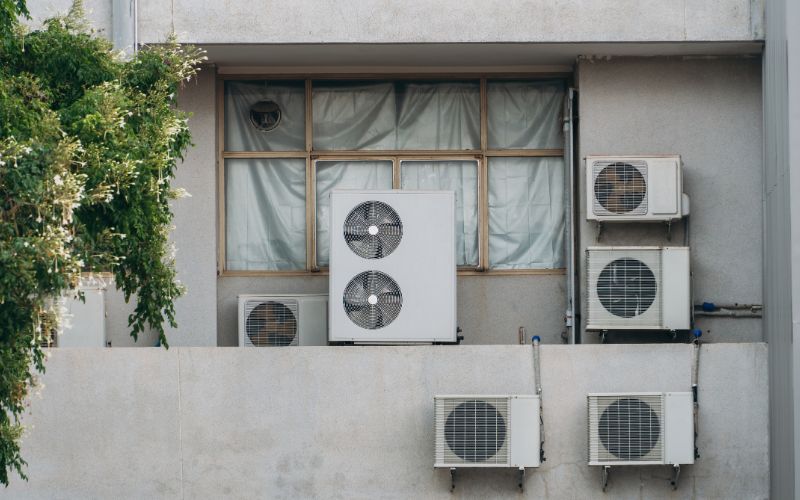
Split air conditioners are often called ductless systems. These systems have two parts: an indoor unit and an outdoor unit.
How Does It Work?
The indoor unit is placed in the room you want to cool, while the outdoor unit is placed outside. The two units are connected by pipes that carry refrigerant. The indoor unit cools the air and blows it into the room, while the outdoor unit pushes the hot air outside.
Best For:
Split air conditioners are perfect for homes or offices without ducts. They can cool one or more rooms, depending on how many indoor units are installed.
Pros:
Quiet and energy-efficient.
No need for ducts, so they’re easier to install.
Can cool multiple rooms if needed.
Cons:
Higher cost compared to window units.
Needs professional installation.
Takes up space on the wall.
4. Portable Air Conditioners
Portable air conditioners are small and can be moved from room to room. They are a flexible option for cooling.
How Does It Work?
Portable air conditioners work like window units. They pull warm air into the unit, cool it, and then release the cool air back into the room. The hot air is vented outside through a hose that connects to a window.
Best For:
Portable air conditioners are good for renters or people who want a temporary solution. They work well for small to medium-sized rooms.
Pros:
Easy to move from one room to another.
No need for permanent installation.
Good for short-term cooling.
Cons:
Less energy-efficient than other systems.
Needs a window for the vent hose.
Can be noisy.
5. Hybrid Air Conditioners
Hybrid air conditioners are a mix of traditional air conditioners and heat pumps. They can cool and heat the air, so they work year-round.
How Does It Work?
Hybrid air conditioners use a heat pump to cool and heat the air. In the summer, they cool the room, and in the winter, they can switch to heating mode. The system automatically changes based on the weather.
Best For:
Hybrid air conditioners are perfect for homes that need both cooling and heating. They are a good choice for places with changing weather conditions.
Pros:
Cools and heats the room.
Energy-efficient for all-year use.
Great for homes with both hot and cold weather.
Cons:
More expensive to install.
Needs regular maintenance for both cooling and heating functions.
6. Evaporative Coolers (Swamp Coolers)
Evaporative coolers, also called swamp coolers, are an eco-friendly way to cool the air. They use water to cool the air naturally.
How Does It Work?
Evaporative coolers pull hot, dry air through water-soaked pads. As the air passes through, it cools and is blown into the room. This process adds moisture to the air, which is helpful in dry areas.
Best For:
Evaporative coolers are great for dry, hot climates. They don’t work as well in humid areas like London.
Pros:
Uses water instead of chemicals, making it eco-friendly.
Adds moisture to dry air, which can improve comfort.
Cons:
Not effective in humid climates.
Needs regular cleaning of the water pads.
Cools the air only a little.
Conclusion
There are many types of air conditioning systems to choose from, each with its own set of benefits. Whether you’re looking for a system to cool a single room or a whole building, there’s an air conditioner that fits your needs. From energy-efficient split systems to flexible portable units, understanding the different types of air conditioners can help you make an informed decision.
When choosing an air conditioning system, think about the size of your space, your budget, and how long you plan to use it. By doing so, you can choose the best option for keeping your home or office cool and comfortable for years to come
Frequently Asked Questions (FAQs)
1. What is an air conditioning system?
An air conditioning system cools the air inside your home or office by removing heat.
2. Which air conditioner is best for a small room?
Window or portable air conditioners are great for small rooms.
3. Can I use a portable air conditioner in any room?
Yes, portable air conditioners can be moved around, but they need a window for the vent hose.
4. How do I know which air conditioner is right for my home?
Consider the size of your space. Larger homes may need a central air system, while smaller spaces can use window or portable units.
5. Do hybrid air conditioners save energy?
Yes, hybrid air conditioners are energy-efficient because they can switch between cooling and heating based on the weather.