
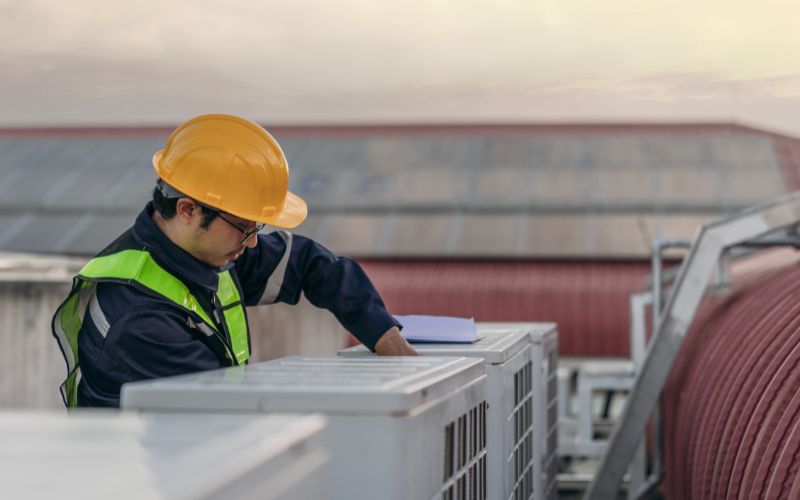
Cooling is not the primary concern when choosing an air conditioning system for a wholesale facility. For this, the facility size, layout, and functional needs matter. What is showing enough on a smaller scale in a warehouse can quickly become inefficient or even useless in a larger one. Businesses will not make costly errors by opting for systems carefully selected for their size, with the help of experts at Airhive UK. One should know the distinction between small and large facility needs; this will help make the appropriate investment.
Why Size Matters.
The square footage may not be the biggest difference between a small and a large wholesale facility, but the complexity of cooling the space is.
Large warehouses have:
- Ceilings that are high and the heat is rising.
- Open plan designs that have lopsided air circulation.
- Heat wastes: Lighting and machinery.
- Frequent door openings
The factors listed above make cooling much more challenging than in small facilities. The usual systems that work well in small spaces may not be suitable for large spaces.
AC Systems for Small Wholesale Facilities
Smaller warehouses or storage units generally have more controlled conditions. These spaces can be cooled more easily and might not need large systems.
Common Options
1. Split Systems
Smaller facilities widely use split AC systems. They are effective, cheap, and suitable for moderate cooling needs.
2. Ductless Mini-Splits
They are best suited to specific cooling. They can be used to control a variety of zones autonomously, such an offices or storage areas.
3. Portable AC Units
Mobile units can bring quick cooling in small, temporary installations. They are, however, best adapted to narrow areas.
Advantages of Small-Scale Systems
- Lower installation cost
- Easier maintenance
- Flexible zoning options
- Small area, energy saving.
The effectiveness of the systems is that cooling needs are easier to manage and regulate, and air circulation can be regulated.
AC Systems for Large Wholesale Facilities
Mega boxes will have to be approached in a completely different way. Thousands of square feet of cooling and high ceilings demand high-powered and scaled systems.
Common Options
1. Readymade rooftop Units (RTUs).
These are among the most popular solutions for large facilities. They are high-capacity rooftop coolers installed on roofs to save space.
2. Central HVAC Systems
They are built for large-scale operations, to provide consistent cooling across large areas, and to fit into high-demand facilities.
3. Variable Refrigerant Flow (VRF) Systems.
VRF allows cooling levels to fluctuate based on demand across different zones, improving efficiency and control.
4. Split systems, several, large.
In additional applications, a series of high-capacity units is used to serve extensive areas. Large warehouses (with 10+ ton capacity) with sophisticated airflow control are often needed to maintain consistent conditions.
Advantages of Large-Scale Systems
- High cooling capacity
- Capacity to deal with huge heat loads.
- Centralized control
- Improved performance in open areas.
These systems are meant to be adapted to the complexity of large environments where airflow and temperature stability are core.
Key Differences Between Small and Large Systems
- Cooling Capacity
Small systems have smaller operating areas than large systems, which operate larger volumes of air. Cooling down small warehouses is straightforward; in large warehouses, it is difficult to move enough air to achieve uniform temperature.
- Airflow and Distribution
Simple airflow systems can be used in smaller facilities. Large facilities have highly sophisticated ductwork, fans, and ventilation systems to prevent hot spots.
- Energy Efficiency
Smaller systems will be more effective in small spaces. However, in large buildings, small systems can increase
by being used excessively.
- Installation Complexity
Small systems are less expensive and time-consuming to install. Large systems need to be planned in detail, have their loads calculated, and be designed.
- Cost Considerations
Small systems are less expensive in the short run, but might not scale. Big systems need more capital to invest in, but are more beneficial in big operations.
The Role of Zoning in Both Systems
Zoning is essential in large plants because it is important to:
- Management of the different storage requirements.
- Reducing energy waste
- Maintaining consistent conditions
The new systems enable the accurate control of various areas, enhancing performance.
When Small Systems are not suitable for Large Spaces.
A typical error is using a variety of small units to cool a large warehouse. This may be a cost-effective solution in the short term, but it is likely to create problems in the long term. Small or portable units can barely cool large spaces, leaving uncooled areas and inefficiency.
Selecting the Appropriate System in Your Facility.
The decision to make is right because of a number of reasons:
- Size of the facility
- Goods stored.
- Heat produced by equipment.
- Long-term and budget goals.
Conclusion
The size of wholesale facilities is comparable, and therefore, small and large facilities will need different air conditioning measures. Smaller areas need small, just-in-time systems that are cost-effective, while larger warehouses need robust, scalable systems that can manage more complex environments.
FAQs
1. Are small AC systems applicable in the large warehouses?
They are not usually suitable for large-scale applications, which leads to an imbalance in cooling and a higher price.
2. Which is the most appropriate AC system for big premises?
Packaged rooftop units and central HVAC systems are commonly used in large warehouses.
3. Does it mean that mini-split systems can be used in warehouses?
They work well in small areas but not in large facilities.
4. What is the significance of airflow within big warehouses?
Proper airflow results in an even distribution of temperature and eliminates hot spots.
5. Which is the right AC system that I can use in my facility?
The best way is a professional assessment of size, layout, and operational requirements.