Air conditioning in industrial areas can easily become the highest recurring cost for any company. The high ceilings, extensive floor space, heavy machinery, and constant activity all put significant strain on air conditioning systems. A lack of a clear strategy can lead to rapidly increasing energy bills and declining efficiency.The positive aspect of all the above is that it does not imply that reduced AC costs compromise performance. With the appropriate strategy and professional services from Airhive UK, industrial facilities can maintain a constant temperature without increasing energy consumption.
Understand Where Energy Is Being Used
The initial cost-cutting action would be to know the performance of your AC system. In most industrial areas, systems are run to full capacity when they do not require such an amount of cooling.
The energy wastage areas are common in areas including:
- Cooling unused zones
- Poor insulation
- Inefficient equipment
- Outdated system controls
Professional assessment helps identify these problems and provides a clear course of action to improve.
Upgrade to Energy-Efficient Systems
The ancient AC systems are known to use a lot of energy and, at the same time, give unpredictable outputs. Wear and old technology decrease efficiency over time, leading the system to work more than it needs to.
Modern systems are to be such that they:
- Change production according to demand.
- Maintain consistent temperatures
- Consume less energy in general.
An upgrade can be costly in the short run but yield significant long-term savings.
Use Zoned Cooling for Better Control
Not all areas of an industrial area require the same amount of cooling. Zoned cooling lets you set separate temperatures for different areas.
For example:
- Production areas might need more powerful cooling.
- Storage areas might require moderate conditions.
- Low-activity spaces can withstand higher temperatures.
This process is specific and reduces unnecessary energy consumption while enhancing efficiency.
Improve Insulation and Sealing
One of the most common reasons for high AC costs is poor insulation. As the cool air escapes, your system will need to work harder to maintain the desired temperature.
To improve efficiency:
- Close door and window gaps.
- Insulate walls and ceilings (upgrade).
- Install insulated doors in high-traffic places.
These alterations help retain cool air and reduce the workload on your AC system.
Optimize Airflow Across the Facility
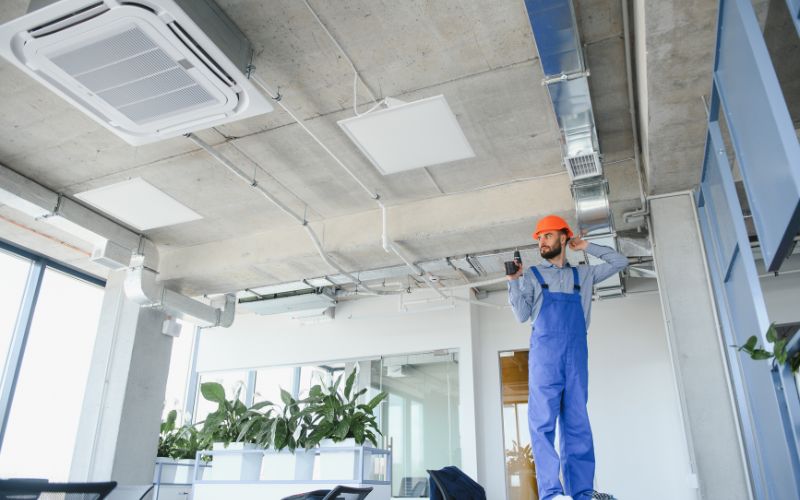
Correct air circulation is crucial in big industrial areas. In its absence, the cool air might not reach every part, resulting in uneven temperatures.It can be used to spread air more efficiently, along with other airflow solutions such as industrial fans. This helps minimize excess cooling requirements and enhance efficiency.
Balanced airflow ensures your system operates optimally.
Schedule Regular Maintenance
A properly maintained AC system is more efficient and consumes less energy. Dust, debris, and deteriorated parts may decrease performance over time.
Regular maintenance includes:
- cleaning filters and coils.
- Checking system components
- Ensuring proper airflow
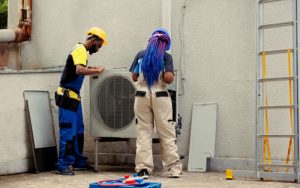
Collaborating with specialists like Airhive UK will keep your system in the best condition and prevent costly breakdowns.
Use Smart Controls and Automation
With modern technology, it is easier to control energy use. With thermostats and automated systems, you can have better control over your AC.
You can:
- Regulate temperatures according to the working hours.
- Minimize cooling when not in peak.
- Track real-time performance of the system.
Automation ensures that your system consumes energy only when required.
Reduce Heat Sources Where Possible
Houses used in industrial settings tend to generate heat from machinery, lighting, and processes. These sources of heat can be minimized to reduce the load on your AC.
Consider:
- Using energy-efficient lighting
- Placing the process of high heat in the cooler hours.
- Enhanced ventilation of equipment.
Such minor adjustments can have a significant impact on total cooling expenses.
Limit Air Loss from Frequent Door Use
In fact, in the industrial setting, doors are opened very frequently due to deliveries and goods transport. This enables warm air to enter and cool air to exit.
In order to mitigate this effect:
- Install air curtains at entry points.
- Take automatic doors closing in a hurry.
- Educate and train personnel to reduce unnecessary openings.
Controlled access will ensure that indoor temperatures are maintained.
Monitor and Track Energy Usage
Monitoring your energy use provides valuable feedback on your AC system’s performance.
The monitoring tools may assist you in:
- Determine peak times of use.
- Detect inefficiencies
- Make changes to enhance performance.
It results in more cost control and efficiency with data-driven decisions.
Plan for Long-Term Efficiency
Reducing AC costs cannot be achieved through quick fixes; it requires a long-term strategy. Making a major investment in efficient systems, routine maintenance, and intelligent controls will yield savings. Your cooling requirements may vary depending on the size of your business. Scalable solution planning helps you adapt without generating additional energy waste.
Conclusion
Achieving cost reduction of AC in industrial spaces can be done through an appropriate blend of strategy, technology, and maintenance. Businesses can significantly reduce energy costs without sacrificing performance by improving efficiency, optimizing airflow, and implementing smart controls. Industrial plants can adopt customized solutions with the professional assistance of Airhive UK that not only provide short-term gains but also can achieve long-term advantages. A properly controlled AC system lowers costs and helps maintain a more efficient, sustainable operation.
FAQs
1. How can I reduce the costs of AC in an industrial space?
Costs can be reduced by using zoned cooling, improving insulation, and updating systems to be energy efficient.
2. Does maintenance really impact energy efficiency?
Yes, periodic maintenance helps the system operate efficiently and consumes less energy.
3. What is zoned cooling?
It enables different areas to set their own temperature settings, enhancing efficiency.
4. Are smart controls able to conserve energy?
Yes, they are optimizing cooling use by controlling it based on demand and time.
5. Why does airflow matter in reducing costs?
When good airflow is in place, it ensures proper cooling without excessive energy use.