
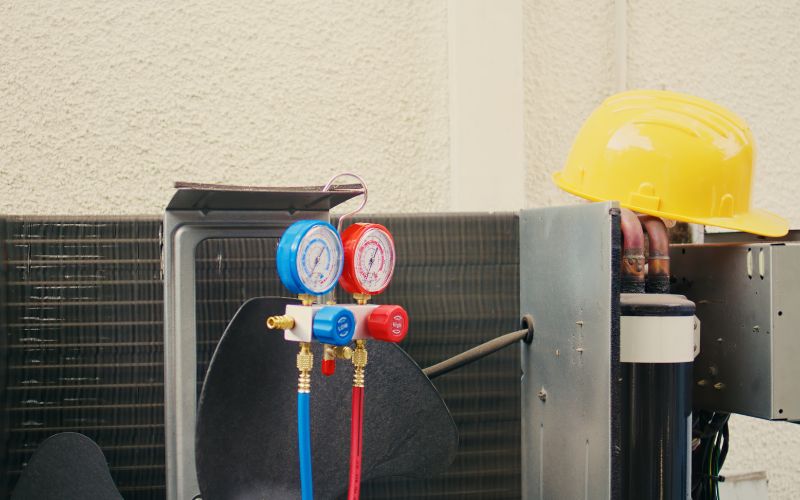
Every AC system has refrigerant, a special fluid that cools the air. Refrigerant absorbs heat, which the AC then pushes outside. If your AC system doesn’t have enough refrigerant, then it won’t cool your home enough.
A refrigerant leak can cause your AC to perform worse and increase your energy bills. An AC leak can also cause major damage to the system’s most expensive part, the compressor.
In this article, I will teach you the major warning signs that indicate your refrigerant levels are low and when you should contact a professional.
What is a Refrigerant Leak
Inside a refrigerant system, there are tubing and components that create a closed-loop system. If there is a leak, this could be due to an open seam, a crack, or a loose joint. These leaks cause the refrigerant fluid to escape the AC system.
It is important to understand that refrigerant is never used up. If your AC is low on refrigerant, it is usually because you have a refrigerant leak somewhere in the pipework or connections.
Some common causes of AC refrigerant leaks are:
- Poor installations
- Wear and tear over time
- Corrosion in copper pipes
- Loose pipe connections
- Physical damage to pipework
Why Are Refrigerant Leaks A Serious Problem
Sure, a small refrigerant leak might seem like no big deal, but ignoring it might cause some serious and expensive damage.
Some common problems caused by leaks in AC system refrigerants include:
Weak cooling performance
Most obviously, low refrigerant reduces the system’s ability to absorb heat, and therefore, your house will not cool down even if the AC runs the whole day
More expensive Electricity Bills
The system works harder and runs constantly, which increases energy consumption and therefore increases your utility bills.
Longer running times
Because your system is not able to reach the desired temperature, it may actually seem like your AC is continuously switched ON. This is called ‘fighting’ and adds a lot of stress to the components of the AC.
Ice on your AC
If the refrigerant is low, this may cause some parts of your AC to freeze (including the copper lines and evaporator coil). When the ice melts, it may cause water leaks.
Compressor failure
If the refrigerant is low, the compressor will overheat and damage it. This is one of the most expensive parts to fix or replace.
How to Prevent Refrigerant Leaks?
Refrigerant Leak Prevention
Leak repairs are more costly than preventative measures.
Professional Installations
Refrigerant leaks are commonly caused by a suboptimal system. Improperly sealed pipe connections and poorly set system pressures will lead to leaks.
Yearly System Checks
Before leaks become problematic and potentially costly, proactive measures can be put into play. Pressure, pipe, and joint inspections can all be performed during routine system evaluations.
Outdoor Unit Maintenance
A unit that is subject to the outside elements will need a clean, safe, and uncluttered zone for proper air circulation. Periodic inspections will be effective in shielding the unit from the elements that can lead to pipe damage and corrosion.
Minimizing System Vibration
If the unit is excessively vibrating, it can lead to loosening of joints over time. To avoid this, the unit should be installed in a way that it is fully secured, and the pipework is supported to avoid movement and subsequent leaks.
Don’t Attempt Repairs
All refrigerant systems are robustly sealed and under pressure. Any work done that is not performed by a qualified professional can result in damage, the contravention of warranties or breach of laws.
If help is needed due to a refrigerant leak, it is important to have a qualified person attend to it, as there are regulations that govern how this work is to be done.
How to Detect a Refrigerant Leak
The sooner you can notice the signs of a refrigerant leak, the better to avoid any complications
Problems with AC Cooling
Reduced cooling performance is one of the first signs of a leak. You might feel that the AC is blowing less cold air than normal.
Ice, Either Outside or Inside Units
Evaporator coils are more likely to freeze when the pressure in a system is low. If this is the case, you might notice ice that has formed on the indoor unit or outdoor unit refrigerant lines. After the ice thaws, you might notice melted ice dripping water.
Bubbling or Hissing Noises
If the unit or any of its pipework is making a hissing or bubbling noise, it is very likely that refrigerant is leaking somehow. This type of noise is typically caused by small cracks or loose joints in the refrigerant lines.
Unusual Chemical Smell
Leaking refrigerants in the air can create the scent of chemicals and can make the air smell sweet.
How Much Does a Refrigerant Leak Repair Cost
The location of the leak in the AC system, the size of the AC system, the type of refrigerant, and whether any other parts have been affected determine the price of repair. However, early detection can help you save higher costs.
Final Thoughts
Ignoring a refrigerant leak can cause the system to lose cooling ability. The most effective way to find and avoid leaks in an AC system is to have a professional do the initial installation, do ongoing maintenance, and do repairs if needed.
Taking action early is always the best.
Frequently Asked Questions
-
What causes a refrigerant leak in an AC system?
Leaks in refrigerants are usually caused by poor installation, loose connections, corrosion in copper piping, and normal ageing.
-
How do I know if my AC has a refrigerant leak?
Indicators can include weak cooling, icing on the unit, hissing noises, high energy bills, and the system constantly running.
-
Is a refrigerant leak dangerous?
Small leaks typically are not a danger to the environment; however, they can damage the AC system.
-
Can I run my AC with low refrigerant?
Yes, however, it is not advised, as it can damage the compressor and result in very expensive repairs.
-
Can I refill the refrigerant myself?
No, refrigerants are handled by certified professionals. In the UK, it is illegal to refill refrigerants without an F-Gas certification.