The cost of energy is going up all over the UK. Air conditioning is one of the biggest power users in a lot of businesses. During the day, when electricity prices are usually at their highest, offices, warehouses, stores, and hotels all need a lot of cooling.
The good news is that solar panels and battery storage can work very well with commercial air conditioning systems. This combination can cut costs and carbon emissions and make energy more secure when it is designed correctly.
Let’s make it clear.
Why Solar Panels and Commercial Air Conditioning are a Good Match
Avoid Peak Electricity Charges
Solar panels make the most electricity during the day. Commercial air conditioning systems are also primarily used during the day. This natural overlap makes solar power ideal for heavy buildings.
Use Stored Energy Later
Instead of paying a lot of money for peak-time electricity from the grid, your AC can run on solar energy that comes from your own roof.
Store Extra Solar Power
Things get even smarter when you add a battery system. You can save any extra solar power that you don’t use right away.
The Main Parts of the System
An integrated setup usually has:
Step 1. Solar Panels
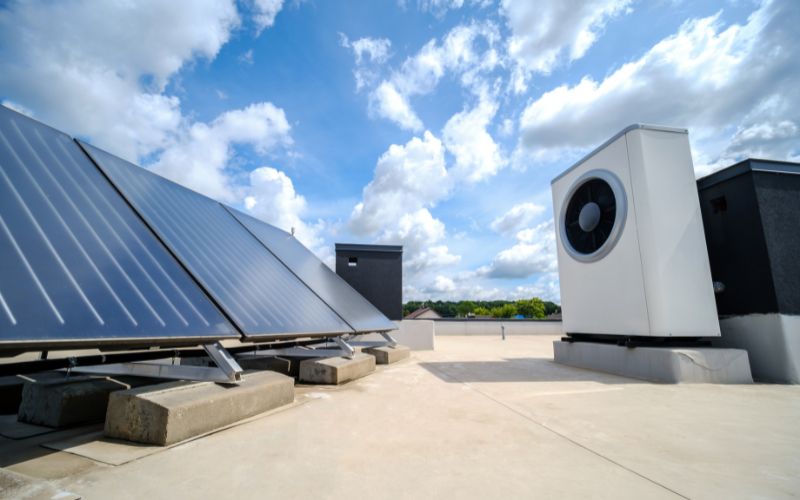
They make electricity from sunlight when they are installed on the roof or on land.
Step 2. Inverter
Changes solar energy into electricity that the building can use.
Step 3. Commercial Air Conditioning
Most of the time, modern inverter-driven systems like VRF or high-efficiency rooftop units.
Step 4. Battery Storage
Keeps solar electricity that isn’t being used so it can be used later.
Step 5. Energy Management System
Smart controls that keep track of how much power is being used and decide when to use solar, battery, or grid power.
Every part has a job to do, but the most important thing is how they work together.
How It Works During the Day
-
Morning to Afternoon
Solar panels make power.
- This power goes straight to the AC system.
- The battery gets charged with extra energy if the building’s demand is less.
-
Late in the Afternoon
Solar output drops.
- The building starts to use stored battery power to cool itself down.
-
Evening
- If the cooling is still needed, the battery continues to supply power.
- The building only draws more power from the grid when the battery is low.
Everything happens on its own. There is no disruption to comfort inside the building.
Financial Benefits for Businesses
Putting commercial air conditioning systems together with solar panels and batteries has clear financial benefits.
Lower daytime electricity bills
Many UK commercial tariffs charge more during busy daytime hours, so the savings can be big.
- Reduced Peak Demand Charges
Demand charges are a common part of many business energy contracts. These are based on the most electricity used at any one time during a billing period.
Battery storage helps by:
- Giving stored energy when it’s needed the most
- Stopping sudden spikes in grid use
- Lowering the monthly demand charges
Long-Term Financial Protection
The combined system over time:
- Increases return on investment
- Lessens the risk of rising energy prices
- Gives you more control over how much it costs to run your business
This integrated approach gives businesses both short-term savings and long-term stability in their energy use.
Benefits for Carbon and Sustainability
More businesses in the UK are making goals for sustainability. Combining solar power with commercial cooling cuts down on the carbon emissions that come from using electricity.
This can help:
- Plans for net zero
- Reporting on ESG
- BREEAM evaluations
- Tenants’ and investors’ expectations
It also strengthen your brand as a responsible and forward-thinking company
What Needs to Be Considered
- The system needs to be the right size for the amount of cooling needed and the amount of electricity used in the past.
- The final design is affected by things like roof space, shading, operating hours, and seasonal demand patterns. Every building is different.
- Three-phase power supplies are used in most commercial buildings, so the integration must be carefully balanced to make sure the system works well and doesn’t cause any electrical problems.
To get the most out of your solar panels, batteries, and AC load, you need to make sure they are the right size and aligned.
Why You Should Choose Air Hive UK
To successfully integrate, you need to know a lot about HVAC, electrical systems, and renewable energy design.
We at Air Hive UK use a fully integrated method. Instead of treating solar panels, battery storage, and air conditioning as separate parts, we design them to work together as one system.
This makes sure:
- Correct load analysis
- Optimised solar sizing
- Correct battery setup
- Control of the system without seams
- Long-term performance that you can count on
As a result, the commercial building is smarter and ready for the future, and it saves money, is more stable, and works better.
Final Thoughts
Air conditioning for businesses doesn’t have to mean high energy bills. It becomes part of a smarter energy system when used with solar panels and battery storage.
The end result is lower costs, fewer carbon emissions, and better protection against price increases in the future.
Integrated design at Air Hive UK makes sure that solar, storage, and commercial AC systems all work together well and reliably.
Frequently Asked Questions ( FAQs )
-
Is it possible to connect solar and battery storage to commercial AC systems that are already in place?
Yes, most of the time they can. As long as the electrical infrastructure allows it, solar panels and batteries can be added to existing systems.
-
Will solar power be enough to power the whole air conditioning system?
It depends on how big the system is and how much cooling it needs.
-
How long do batteries in businesses last?
Most commercial battery storage systems last between 10 and 15 years, depending on how they are used and what kind of technology they use.
-
Is this solution suitable for all kinds of business buildings?
It works best in buildings that need a lot of cooling during the day, like schools, offices, stores, and warehouses.
-
How long does it take to get your money back?
The return on investment changes based on the size of the system, the cost of energy, and how it is used.